Boomers vs Gen Z: The Ultimate Generational Music Battle
When grandparents and grandchildren go head-to-head in music trivia, something magical happens. Here's how to host the ultimate cross-generational showdown.
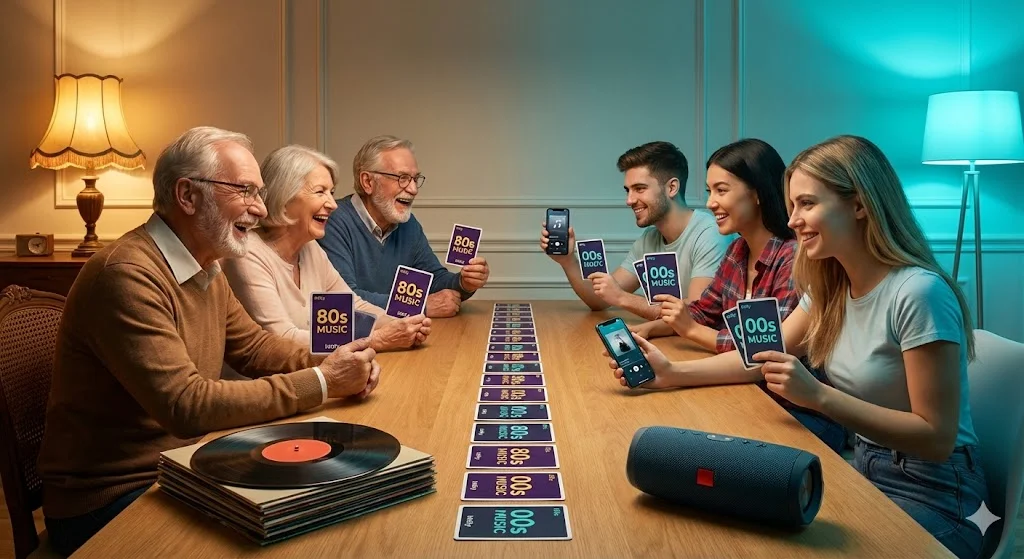
There's a moment in every family gathering when the generations retreat to their corners. The older folks cluster around the kitchen table sharing memories, while the younger ones disappear into their phones in the living room. But what if there was a way to bring everyone together, laughing and competing as equals? Enter the generational music battle, where knowing your Olivia Rodrigo is just as valuable as remembering your Buddy Holly.
The beauty of pitting generations against each other in music trivia lies in the surprising balance it creates. Boomers might know every lyric from the British Invasion, but they're helpless when a TikTok viral hit starts playing. Gen Z can identify Doja Cat from three notes but draw blanks on disco classics their parents danced to. This natural equilibrium makes for genuinely unpredictable competition where age becomes irrelevant and musical passion is the only currency that matters.
Setting up a generational battle requires some thoughtful curation. The playlist needs to span decades fairly, giving each generation home-court advantage for some rounds while forcing them outside their comfort zones for others. A good mix might include rock anthems from the seventies, synth-pop from the eighties, grunge from the nineties, pop-punk from the two thousands, and streaming-era hits from recent years. Each era should have roughly equal representation to prevent any generation from dominating through sheer volume of familiar songs.
Team formation adds strategic depth to the evening. Rather than strict age divisions, consider mixing teams so each has representatives from different generations. A team combining grandma's deep knowledge of Motown with a teenager's expertise in current charts creates fascinating dynamics. Team members find themselves relying on each other, appreciating skills they might otherwise dismiss.
The trash talk is half the fun. When a boomer confidently declares that real music died in 1989 and a Gen Z player immediately identifies a 2020 song the older player missed, the teasing writes itself. These playful jabs, delivered with love across the dinner table, create the kind of family memories that get referenced for years. The key is keeping it good-natured—the goal is connection, not genuine conflict.
Music becomes a time machine during these battles. When a song from 1975 plays, watch the older players' faces transform. They're not just remembering a song; they're transported to a specific moment: their first car, a high school dance, the summer they fell in love. Younger players get to witness these memories surfacing, gaining glimpses into their elders' youth that typical conversation rarely reveals.
The reverse happens too. When a current hit plays and the youngest players light up with recognition, older generations get a window into contemporary culture they might otherwise ignore. That song their granddaughter keeps humming suddenly has context. They understand, perhaps for the first time, why it matters to her. Music bridges the gap that years create.
🎵 Create your own music quiz
Surprise your guests with a personalized music game — ready in just a few minutes.
Handicapping can make lopsided matchups more interesting. Give the generation that's trailing bonus points for correctly answering questions outside their era. If grandpa nails a Billie Eilish track, award double points. If a teenager correctly identifies The Supremes, same deal. This system rewards cultural curiosity and encourages players to pay attention to music beyond their default preferences.
The soundtrack of a generational music battle tells the story of how popular music evolved. Players naturally notice connections: how the guitar riffs in modern songs echo classic rock, how sampling brings old hits into new contexts, how certain chord progressions never go out of style. These observations spark conversations about influence and innovation that pure trivia can't generate.
Physical reactions differ fascinatingly by generation. Boomers might tap their feet and sway unconsciously when their songs play. Millennials often sing along without realizing they've started. Gen Z players sometimes perform TikTok choreography before they've consciously identified the track. These embodied responses reveal how deeply music integrates with identity across every generation.
The best generational battles end with a shared playlist. Each player contributes their favorite discovery from the evening—a song from another era that surprised them. This collaborative creation gives everyone something to take home, a musical souvenir of the evening that continues generating connection long after the party ends.
Don't underestimate the teaching moments that emerge naturally. A teenager explaining why a particular artist matters to their generation is practicing articulation and advocacy. A grandparent sharing the cultural context of a protest song is passing down history. These exchanges happen organically, without the forced feeling of deliberate education.
The competitive structure matters less than the atmosphere you create. Whether you use a formal app like Hitster or simply take turns playing songs from your phones, the magic comes from genuine engagement across age lines. Keep score loosely, celebrate surprising answers enthusiastically, and remember that the real victory is a room full of family members laughing together.